
Andrews Develops Student Research Center
To promote student scholarship
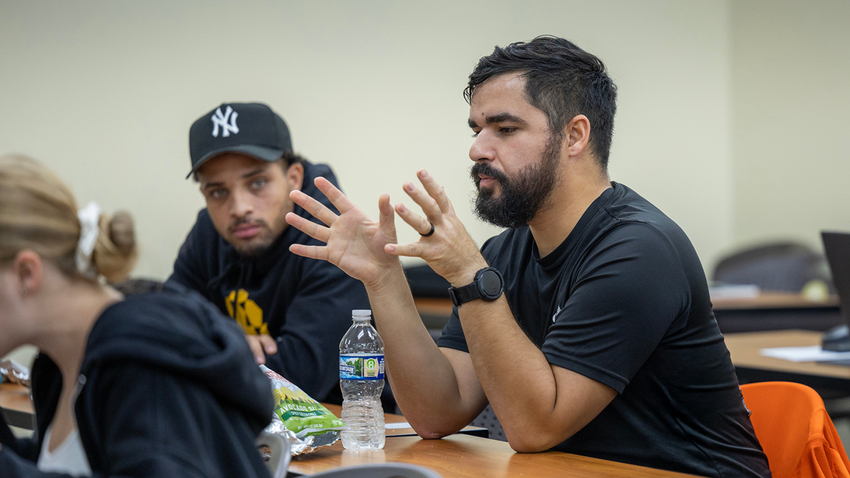
The USRC program combines faculty-led instruction with hands-on support from experienced student research assistants.
Andrews University has established the University Student Research Center (USRC), a yearlong program designed to help undergraduate and graduate students develop research skills and pursue scholarly opportunities.
The 12-module program combines faculty-led instruction with hands-on support from experienced student research assistants. Participants learn to identify research problems, review scholarly literature, develop research questions, analyze data and communicate findings. The program aims to help students turn their interests into research projects and measurable academic and professional outcomes.
According to Carlisle Sutton, sponsored research officer at Andrews, the center aims to help students build the skills and assurance needed to engage in research and open doors to future opportunities. “Studies have shown that undergraduate research is associated with increased student retention, a greater likelihood of pursuing graduate and professional education, and stronger preparation for research-related and professional career pathways. Students who are engaged in research also demonstrate improved critical thinking, problem solving, communication, collaboration and time management. We want to be able to help our students so that every student who leaves Andrews University will be able to say with confidence that they can engage with research,” Sutton says.
Each session includes approximately 40 minutes of faculty-led instruction followed by two hours of guided research support. The program is open to students across disciplines, regardless of previous research experience, and it complements existing opportunities such as the J.N. Andrews Honors program and Undergraduate Research Scholars program.
Stacie Hatfield, associate professor of anthropology at Andrews, has worked with students conducting research through the Undergraduate Research Scholars Program for several years. “The USRC provides additional levels of support and mentorship for students engaged in research,” she says. “Support at the University level makes research opportunities and mentorship available to a broader segment of our student population.”
Hatfield adds that research has value beyond academic achievement as well, allowing students to explore questions about the world and develop knowledge that can shape their professional and spiritual lives. She hopes students will gain experience in navigating academic research structures, analyzing information and making meaningful connections from data.
Sutton cited results from the 2025 National Survey of Student Engagement showing that 44% of Andrews seniors reported research experience working with faculty, compared with 3% of freshmen. He hopes the center, in addition to the other incentives offered through the Office of Research & Creative Scholarship, will encourage earlier participation in research and increase the number of students engaged in research at Andrews.
For Kamran Owusu-Frimpong, sophomore business management and leadership student, the center has helped him develop focused research topics and consider how certain issues affect others. He became involved after Sutton encouraged him to explore health care research. “The most valuable thing I have learned is how to research a topic, identify an area of interest, and narrow my focus to determine what specifically I should be looking for and how the topic is affecting others,” Owusu-Frimpong says.
He believes the center gives students an opportunity to turn their ideas into meaningful academic work. “Through research, you can contribute positive and meaningful change to the area you are studying while also demonstrating humility and a willingness to learn,” Owusu-Frimpong shares.
By the end of the academic year, USRC participants are expected to work toward tangible outcomes, such as completing a research project, presenting findings, preparing a manuscript for publication or pursuing a research-related internship. Students who attend at least 10 of the 12 sessions will receive a certificate of completion.
Looking ahead, Sutton hopes to expand participation through additional cohorts and a possible summer research camp where students could work more extensively with faculty. The center also aims to connect students with external research internships and other scholarly opportunities. “We want you to learn the skills in the classroom. We want you to be able to understand how those skills impact the wider world,” Sutton says.
Through the USRC, Andrews aims to help students move beyond learning about research to developing the confidence and skills to contribute to it.
PR
pr@andrews.edu
